The kitchen is undeniably the heart of the home, and when it comes to designing or remodeling this space, your cabinetry sets the definitive tone. While base cabinets do the heavy lifting for weight and appliances, it is the upper cabinets that immediately catch the eye. They dictate the room’s visual height, display your personal style, and house your everyday essentials.
If you are planning a renovation, knowing how to choose custom kitchen uppers is a critical step. From optimizing vertical space to selecting the perfect hue—like a striking blue kitchen cabinet—every decision matters. This comprehensive guide will walk you through designing the perfect upper cabinetry, integrating gorgeous blue palettes, and creating a cohesive, highly functional space.
1. Prioritize Function with Custom Kitchen Storage
Before diving into aesthetics, your uppers need to work for your lifestyle. The primary advantage of custom cabinetry is that it eliminates dead space.
When planning your custom kitchen storage, consider the following for your upper cabinets:
- Ceiling Height: Taking cabinets all the way to the ceiling provides extra storage for seasonal items and eliminates the dreaded dust-trap above the cupboards.
- Depth: Standard uppers are 12 inches deep, but custom uppers can be built to 15 inches to accommodate oversized dinnerware or small appliances.
- Inserts and Organization: Incorporate pull-down shelving, spice racks, or vertical dividers for baking sheets directly into your upper design.
- Glass Fronts vs. Solid Doors: Glass-front uppers break up heavy blocks of cabinetry and allow you to showcase beautiful glassware, while solid doors hide everyday clutter.
2. Navigating Kitchen Cabinet Colors
Once the functional layout of your uppers is established, it is time to talk about the fun part: aesthetics. While white and wood tones are traditional favorites, homeowners are increasingly turning to bolder, more expressive kitchen cabinet colors.
At the forefront of this design revolution is the blue cabinet. Blue acts as a versatile neutral, bringing warmth, depth, and character to a space without overwhelming it. However, choosing the right shade requires careful consideration of light vs dark blue aesthetics.
Light blues, such as powder or robin’s egg, evoke a breezy, expansive feel, making them ideal for smaller rooms. On the other end of the spectrum, dark blues bring a sense of grounded luxury and architectural weight.
Choosing Your Shade: Navy vs. Royal Blue
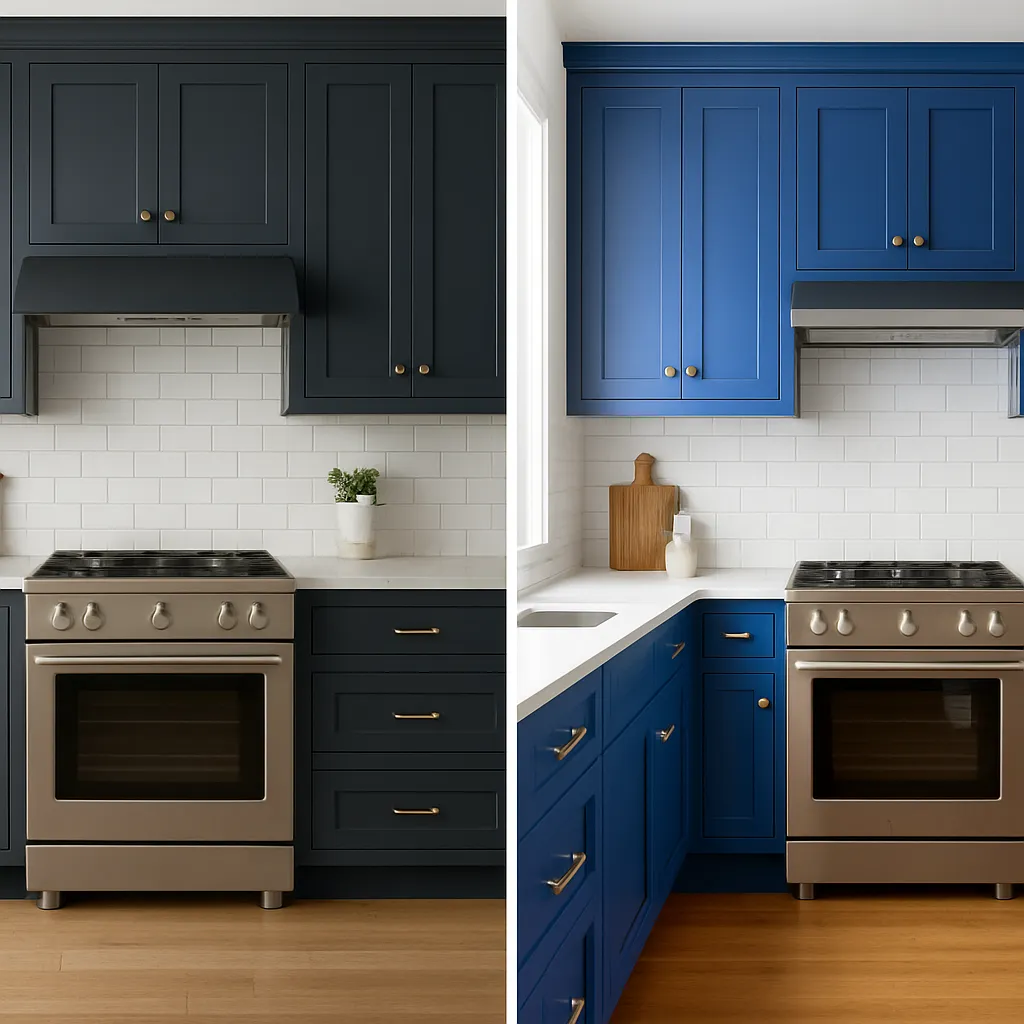
When deciding between bold blues, many homeowners weigh navy vs royal blue kitchens.
- Navy Blue: Navy is timeless. It absorbs light beautifully, hides smudges well, and acts as a sophisticated anchor. It is a highly traditional color that seamlessly transitions into modern spaces.
- Royal Blue: Royal blue is more vibrant and energetic. It reflects more light and serves as a true statement piece, perfect for eclectic or ultra-modern homes looking for a pop of vivid color.
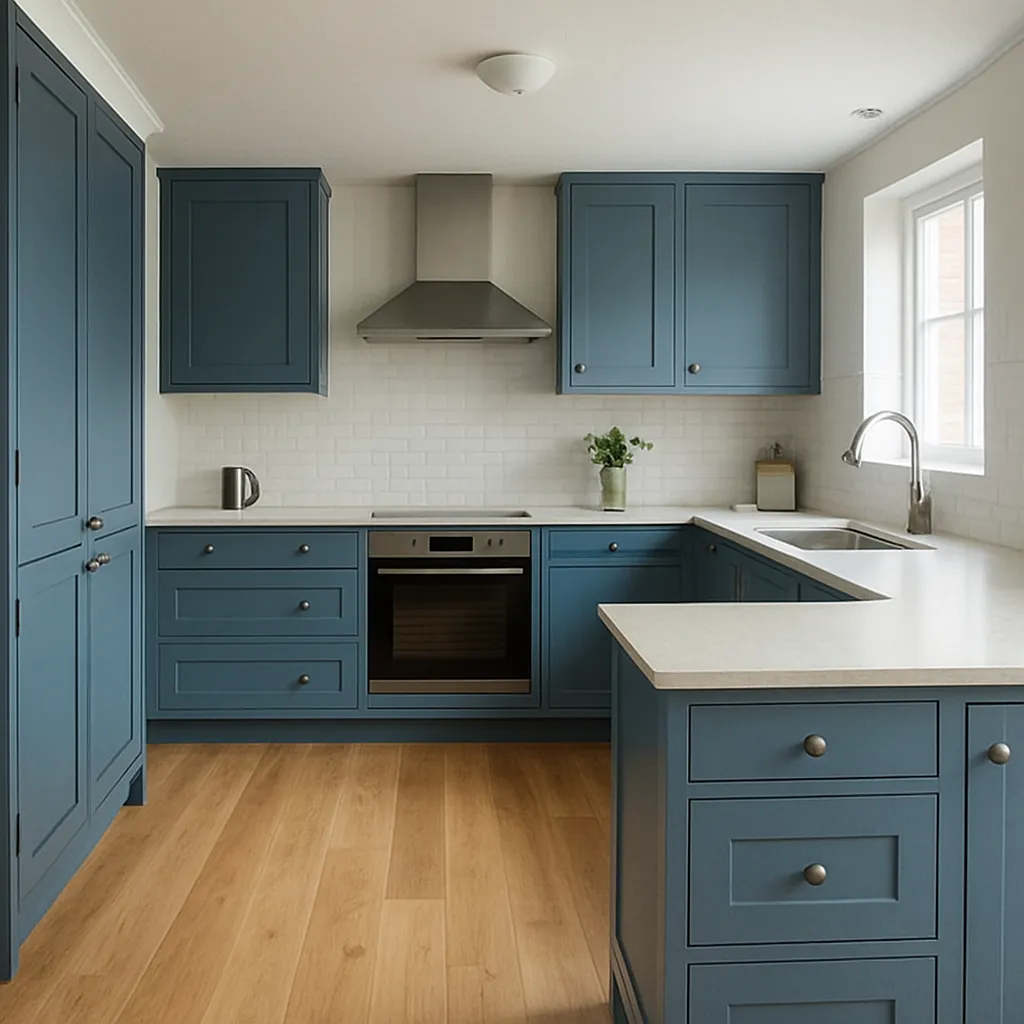
3. The Magic of Two-Tone Cabinetry
If you love the idea of dark blue but are worried it might make your kitchen feel top-heavy, the two-tone trend is your best friend.
Two-tone white navy kitchens are incredibly popular for a reason. By installing crisp white custom uppers and grounding the room with navy base cabinets, you draw the eye upward, making the ceilings appear higher and the room feel exceptionally airy. The white uppers reflect the room’s ambient and natural light, while the dark lowers anchor the design and hide scuffs from foot traffic.
You can carry this grounded feeling into the center of the room by exploring navy blue kitchen island ideas. Consider wrapping your island in navy beadboard, adding a dramatic waterfall edge, or incorporating open shelving at the ends for a bespoke look that ties perfectly to your lower cabinets.
4. Selecting the Right Door Style
The profile of your cabinet doors heavily influences the room’s overall vibe. For a look that bridges the gap between traditional and contemporary, shaker style navy cabinetry designs are unparalleled. The clean, recessed-panel lines of a shaker door add subtle architectural interest without looking cluttered. When applied to custom uppers, shaker doors provide a clean geometry that visually organizes the upper half of your kitchen walls.
5. Pairing Countertops and Backsplashes
Your custom uppers do not exist in a vacuum; they interact directly with your backsplash and countertops. Getting this trio right is the secret to a high-end finish.
Countertops
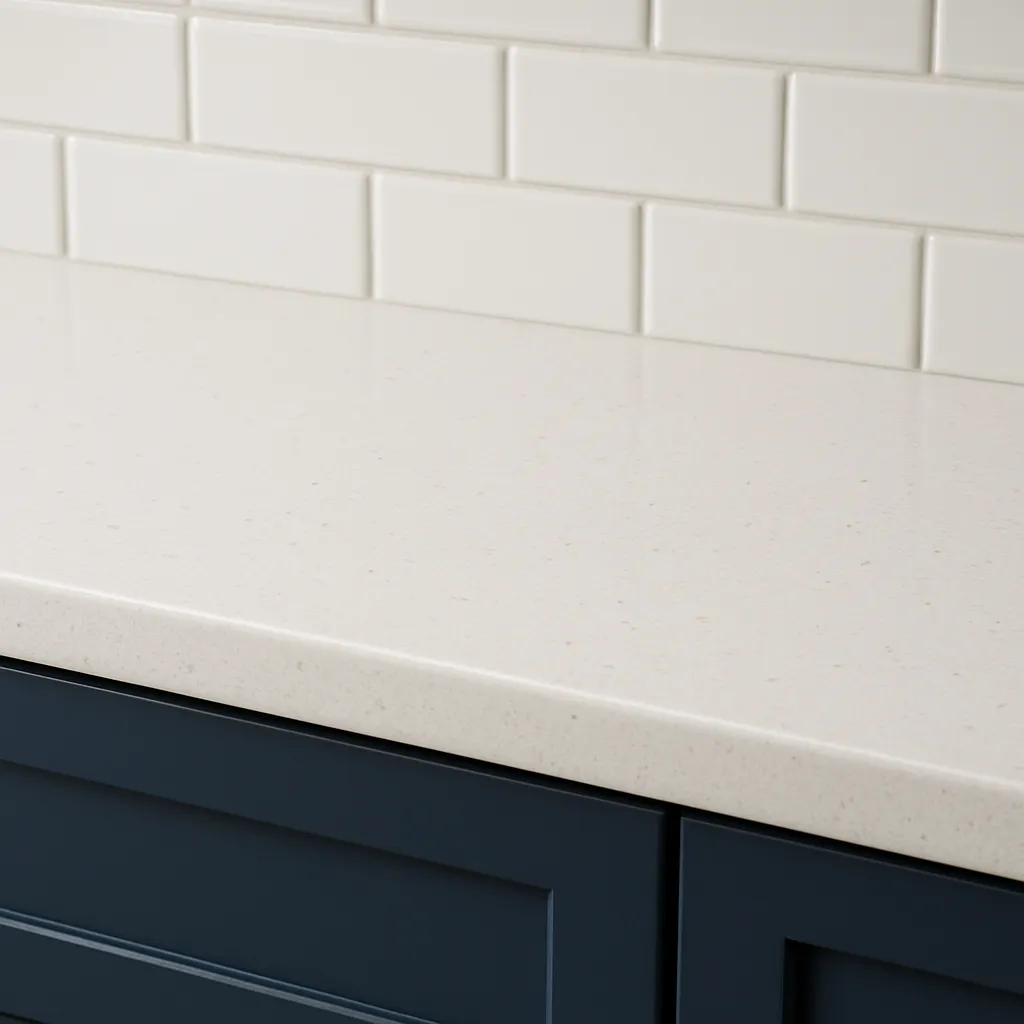
When working with dark cabinets, you want a countertop that provides a crisp contrast. Quartz countertops for navy kitchens are a top recommendation among designers. A bright white quartz with subtle gray or gold veining (mimicking Calacatta or Carrara marble) offers incredible durability while beautifully reflecting light back up toward your upper cabinets.
Backsplashes
One of the most common questions designers hear is: what backsplash matches navy cabinetry?
- Classic Subway Tile: A crisp white subway tile is a foolproof choice that makes navy lowers pop and blends seamlessly into white custom uppers.
- Zellige Tile: For a more textured, artisanal look, pearlescent or warm gray Zellige tiles add stunning visual depth.
- Slab Backsplashes: Running your quartz countertop seamlessly up the wall to meet your upper cabinets provides a modern, luxurious, and grout-free aesthetic.
6. The Jewelry of the Kitchen: Hardware
Your choice of hardware can completely alter the personality of your cabinetry. Because navy is a cool, dark tone, introducing warm metals creates a striking, elegant contrast.
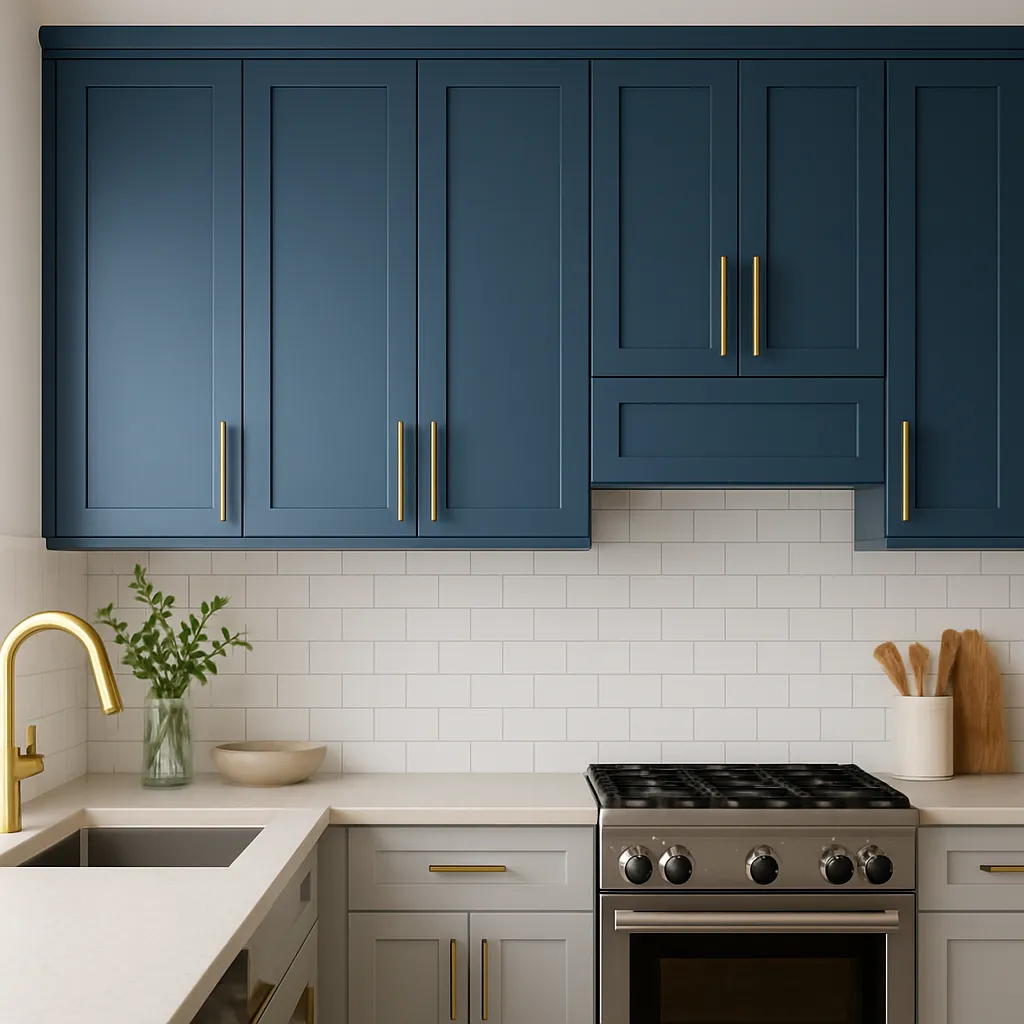
Brushed gold hardware navy cupboards are a match made in design heaven. The matte warmth of brushed gold or brass cuts through the dark, moody blue, adding an instant touch of glamour. For your uppers, consider sleek gold T-bar pulls or delicate knobs to keep the eyeline uncluttered.
If your home leans more toward a rustic or transitional aesthetic, look into farmhouse navy cabinetry hardware. Think oil-rubbed bronze cup pulls for the lower drawers and matching latches for your custom uppers. Matte black hardware is another excellent choice for a slightly more industrial, understated feel.
7. Creating a Cohesive Space: Walls and Floors
To ensure your beautiful custom uppers and blue tones shine, the surrounding elements must be in harmony.
Wall Colors
Selecting wall colors for navy kitchens requires a delicate balance. You want a color that complements the blue without competing with it.
- Warm Whites: Alabaster or creamy whites prevent the room from feeling stark or clinical.
- Soft Greige: A blend of gray and beige provides a gentle, sophisticated backdrop that makes navy blue cabinets look exceptionally rich.
Flooring
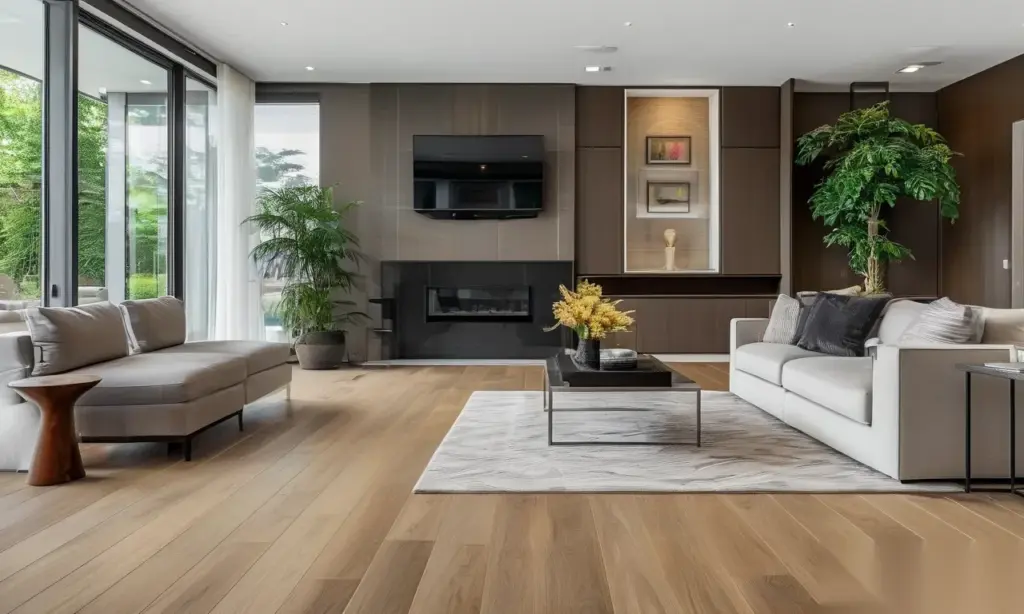
The best flooring for blue kitchens generally features warm, natural tones to offset the coolness of the cabinetry. Light to medium-toned hardwoods, particularly white oak or hickory, are spectacular choices. The natural grain and warmth of the wood bring life into the space.
When you combine crisp white uppers, navy lowers, gold hardware, and light oak floors, you effortlessly achieve one of today’s most sought-after aesthetics: modern coastal kitchen color schemes. This look is breezy, sophisticated, and universally welcoming.
8. Navigating Small Spaces
Don’t let a compact footprint deter you from bold choices. If you are working with limited square footage, a few small navy kitchen layout tips can make all the difference:
- Use Glass in Uppers: Replace solid doors with glass inserts on your custom uppers to create the illusion of depth.
- Strategic Lighting: Install under-cabinet lighting beneath your uppers to illuminate the countertops and eliminate dark shadows.
- Keep it Low: Keep the dark blue strictly to the base cabinets and use high-gloss white for the uppers to maximize light reflection.
9. Finishes and Updates: Factory vs. DIY
When investing in custom kitchen uppers, the finish is just as important as the build. Professional cabinet makers use catalyzed varnishes and lacquers to create durable painted cupboard finishes. Because upper cabinets are frequently exposed to steam from kettles, heat from ranges, and grease splatters, a durable, baked-on finish is essential to prevent peeling and chipping over time.
However, if a full custom replacement isn’t in the budget, you can still achieve a high-end look by updating your existing uppers. If you decide to take this route, finding a comprehensive painting kitchen cupboards navy tutorial is vital. You will need to thoroughly degrease, sand, use a high-adhesion stain-blocking primer, and apply an enamel-based cabinet paint to ensure longevity.
Final Thoughts on Designing Your Kitchen Uppers
Choosing the right custom kitchen uppers is about balancing everyday practicality with long-term style. By utilizing clever storage solutions, embracing the elegance of a blue color palette, and carefully selecting your hardware, countertops, and flooring, you can create a kitchen that is uniquely yours.
Whether you lean toward a classic two-tone design with shaker fronts or a vibrant, modern layout, your upper cabinets will set the stage. Take your time, consider the natural light in your space, and don’t be afraid to let a little blue into your design!