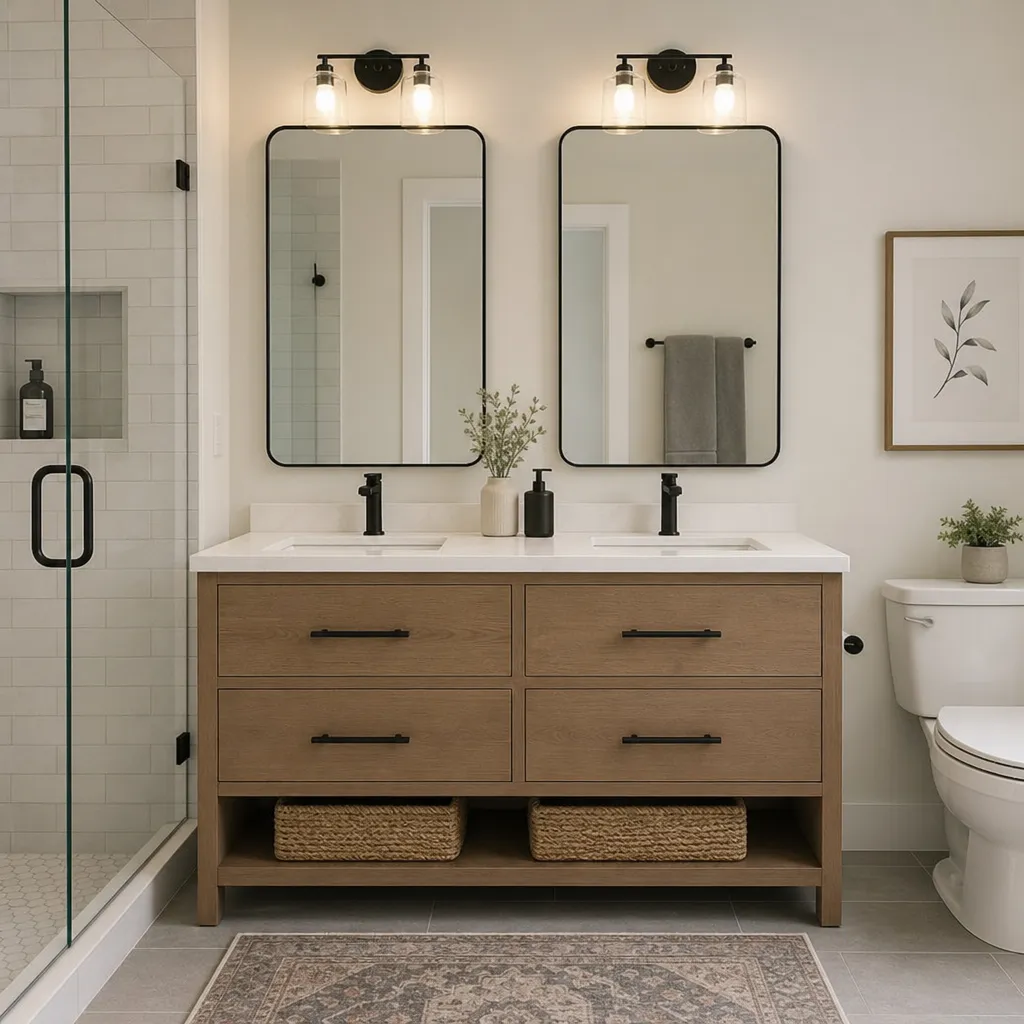
The smart bathroom market is on the brink of a revolution. By 2026, commercial projects will demand more advanced solutions. This shift is driven by the need for efficiency and innovation.
Bathroom technology is evolving rapidly. Automated fixtures and IoT integration are becoming standard. These advancements promise enhanced user experiences and energy savings.
Commercial spaces are increasingly adopting smart solutions. Hotels, office buildings, and public facilities are leading the charge. They seek to improve hygiene and reduce water usage.
The US smart bathroom market is a key player. It contributes significantly to global trends. The focus is on sustainability and eco-friendly materials.
Smart toilets, touchless faucets, and digital showers are gaining popularity. These technologies offer convenience and improved hygiene. They are essential for modern commercial projects.
The COVID-19 pandemic has accelerated this trend. Touchless solutions are now a priority. They ensure safety and compliance with health standards.
As we look to the future, the demand for smart bathrooms will only grow. Commercial projects will continue to drive innovation. The market is poised for significant growth.
The Evolution of Bathroom Technology in Commercial Spaces
The evolution of bathroom technology in commercial spaces is remarkable. Initially, these spaces focused on function. Over time, new demands have fostered innovation and change.
Today, technology is central to bathroom design. Automation is no longer a luxury but a necessity. From touchless faucets to digital showers, innovation knows no bounds.
IoT has become integral in modern bathrooms. It enables real-time monitoring and control. This ensures efficient resource usage and improved maintenance.
Several features have become standard in commercial smart bathrooms:
- Automated fixtures for seamless interaction.
- IoT devices for efficient monitoring.
- Energy-efficient lighting systems.
- Water-saving toilets and faucets.
- Advanced hand-drying technology.
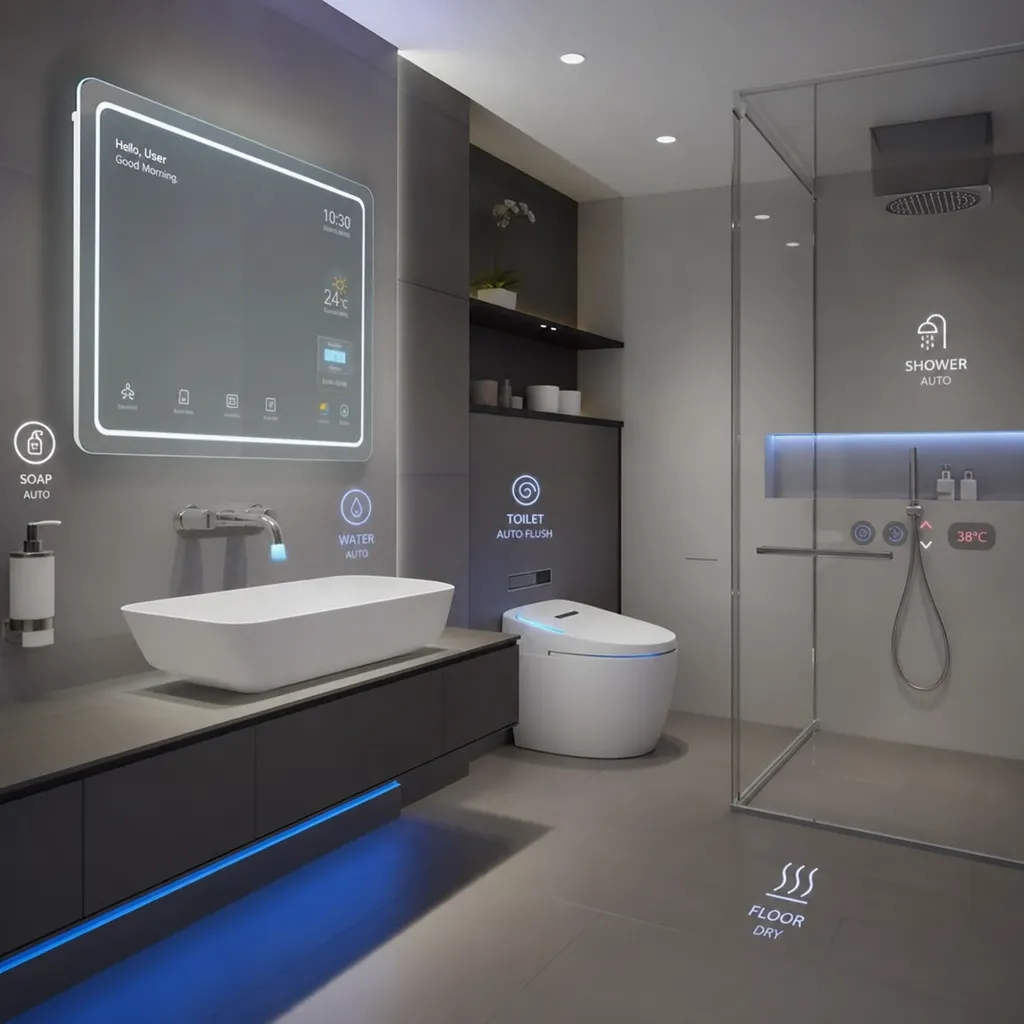
These advancements cater to the evolving needs of users. They ensure comfort, hygiene, and accessibility. Enhancing user experience is central to their development.
The transition to smart bathroom technology has not been instantaneous. It stems from a growing awareness of sustainability and efficiency. Modern commercial spaces recognize the benefits of investing in these technologies.
As we look forward, the drive to integrate AI and data analytics will intensify. Future developments will offer greater personalization and predictive maintenance. This will further transform the landscape of bathroom technology in commercial spaces.
Key Drivers of the Smart Bathroom Market Growth
The growth of the smart bathroom market is driven by several key factors. Technological advances have made smart solutions more accessible. This has revolutionized how commercial projects approach bathroom design.
Firstly, the demand for enhanced user experience plays a vital role. Businesses want to offer comfort and convenience. This drives the adoption of smart technologies.
Secondly, rising awareness about sustainability has influenced market trends. Many companies aim to reduce their environmental footprint. This need has pushed the development of water- and energy-saving technologies.
There are several primary drivers of growth:
- Technological advancements in bathroom fixtures and systems.
- Increasing demand for water conservation solutions.
- Emphasis on energy efficiency in commercial spaces.
- Need for improved hygiene standards following the pandemic.
- Advancements in AI and IoT integration.
Consumer trends also impact the market landscape. As residential smart home technologies gain traction, expectations for commercial spaces grow. Users expect the same level of innovation at work and in public facilities.
Finally, government regulations support this market shift. Policies favoring energy-efficient buildings encourage the adoption of smart systems. Incentives and standards are driving forces behind the transition.
These factors work in tandem to propel the market forward. Developers who capitalize on these trends stand to benefit significantly. By 2026, we can expect even more transformative changes in this sector.
What Commercial Projects Actually Demand in 2026
Commercial projects increasingly require smart bathroom solutions that address modern challenges. The focus is on water efficiency, hygiene, and user experience. This need is shaping the design and technology integrated into these spaces.
The demand for water conservation is more critical than ever. Eco-friendly fixtures and water-saving technologies are at the forefront. Facilities need to demonstrate their commitment to sustainability as a standard practice.
Enhanced hygiene features are now a priority. The COVID-19 pandemic highlighted the need for touchless technologies. This shift led to the rise of automated faucets and toilets in commercial settings.
Commercial entities are also seeking seamless user experiences. Bathrooms should be not just functional but enjoyable. Smart mirrors with personalized settings and digital controls are excellent examples of this trend.
Project specifications often include these key demands:
- Touchless technologies for improved sanitation.
- Water-efficient faucets and toilets.
- Energy-saving lighting and ventilation systems.
- Customizable features for user comfort.
- Robust data analytics for maintenance optimization.
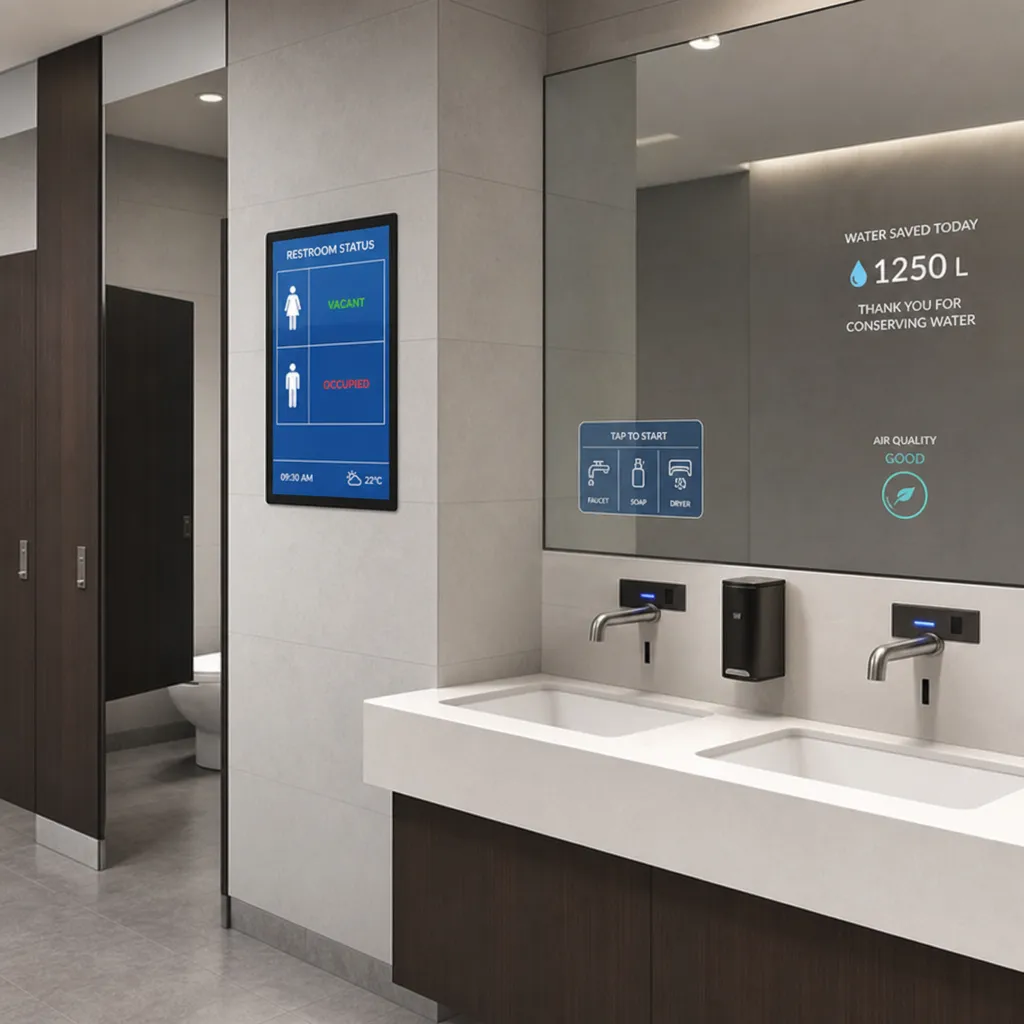
Moreover, accessibility remains crucial in bathroom design. Compliance with ADA standards ensures inclusivity. This aspect is now a fundamental requirement in all commercial bathrooms.
Lastly, businesses favor technologies that offer predictive maintenance. This reduces downtime and ensures optimal performance. AI-driven systems are proving invaluable in maintaining bathroom functionality.
By 2026, the integration of these features will be indispensable in commercial bathrooms. Developers must anticipate these needs to stay competitive. The landscape of bathroom technology is rapidly evolving to meet these new expectations.
Core Features and Technologies Shaping Smart Bathrooms
The rise of smart bathrooms is fueled by cutting-edge technologies. These innovations are central to the design of next-generation bathrooms. They are becoming essential in commercial projects worldwide.
One of the most transformative features is IoT integration. IoT enables devices to communicate and function seamlessly. This connectivity allows for real-time monitoring and control of bathroom fixtures.
Digital showers and smart toilets lead the charge in innovation. These devices offer water-efficient operations and customizable settings. Users can enjoy a tailored experience that balances comfort and conservation.
Automated lighting and climate control are also gaining traction. These systems adjust based on occupancy and time of day. This automation contributes to energy savings and enhances user comfort.
Key technologies shaping smart bathrooms include:
- IoT-enabled connectivity for real-time adjustments.
- Smart toilets with water-saving and self-cleaning features.
- Digital showers offering precise temperature control.
- Automated lighting systems for energy efficiency.
- Smart mirrors with voice and touch controls.
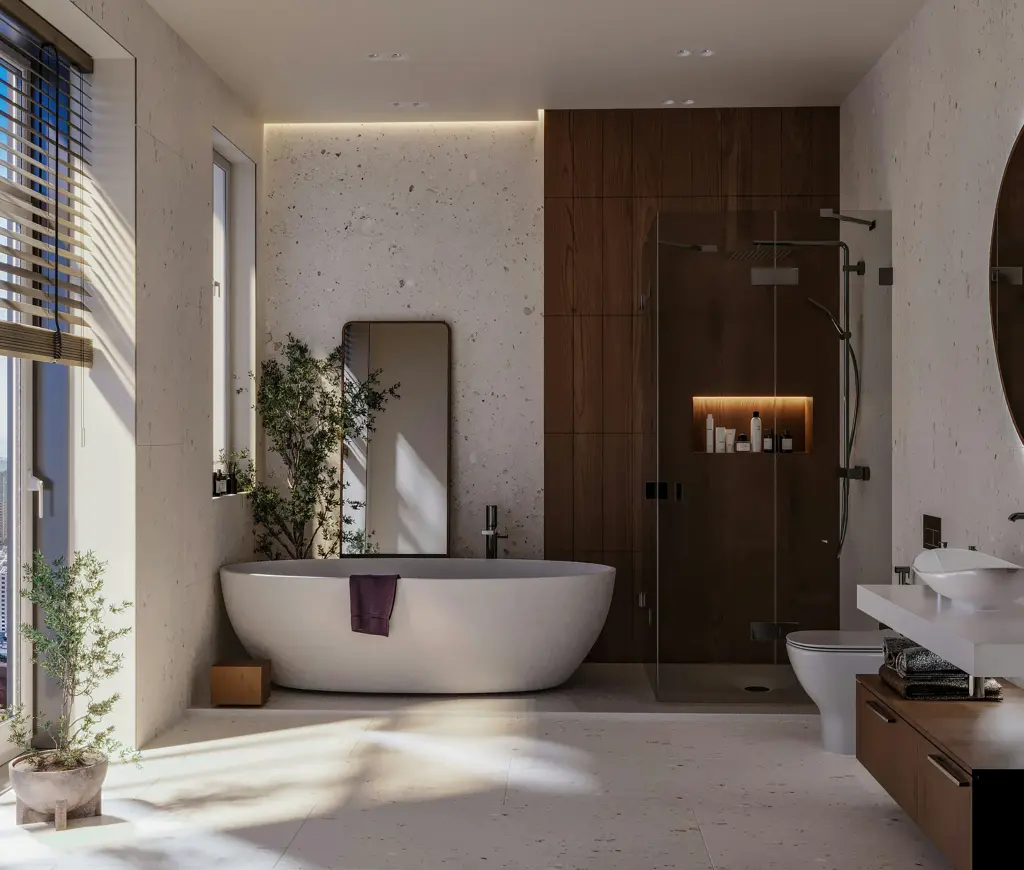
Another essential feature is advanced hygiene technology. Touchless faucets and soap dispensers improve sanitation. They reduce the risk of germ transmission, a major concern for public spaces.
The role of voice control and AI in bathrooms is expanding. These technologies offer hands-free operation, adding convenience. Users can control lighting, play music, or adjust the shower, all by voice.
Finally, data analytics plays a crucial role in maintaining efficiency. It helps in predicting maintenance needs and optimizing resource use. These insights ensure that commercial bathrooms operate smoothly and sustainably.
With these technologies, smart bathrooms are revolutionizing user experiences. They provide not only functionality but also enhance aesthetics and sustainability. The future looks promising for these intelligent spaces.
The US Smart Bathroom Market: Trends and Opportunities
The US smart bathroom market is rapidly expanding. This growth is driven by both innovation and consumer demand. As technology evolves, so do the opportunities within this sector.
Commercial projects in the US are increasingly adopting smart solutions. In hotels and office buildings, these technologies are becoming standard. Such environments offer perfect testing grounds for advanced bathroom technology.
Several trends are emerging in the US market. One key trend is the emphasis on sustainability and energy efficiency. Many commercial projects focus on reducing water and power consumption.
Another significant trend is the rise in demand for touchless fixtures. As hygienic concerns grow, touchless faucets and toilets become more popular. This shift is particularly notable in public facilities and corporate spaces.
Key trends and opportunities in the US smart bathroom market include:
- Increased focus on energy-efficient solutions.
- Rising adoption of touchless and germ-reducing technologies.
- Expansion in hospitality and corporate sectors.
- Integration of AI for enhanced user customization.
- Growing interest in data-driven maintenance solutions.
The integration of AI and smart analytics offers new possibilities. These technologies provide insights that optimize maintenance and performance. Building owners and managers can make informed decisions more easily.
Opportunities also lie in the development of wellness-enhancing features. Chromotherapy and aromatherapy are becoming integral to smart bathrooms. As these trends advance, the US market is set to lead globally.
Sustainability and Wellness: The New Imperatives
Sustainability has moved to the forefront of bathroom design. Eco-friendly solutions are no longer optional but essential. Commercial projects are prioritizing resources that minimize environmental impact.
Energy efficiency is a primary focus in smart bathrooms. Technologies that reduce water and energy use are in high demand. Incorporating these systems helps facilities save on costs and meet regulatory standards.
Besides sustainability, wellness is a critical aspect influencing design choices. Smart bathrooms are integrating features that promote well-being. This shift is seen in both residential and commercial spaces.
Wellness-enhancing technologies include innovations like chromotherapy and aromatherapy. These features aim to improve users’ physical and mental state. They contribute to a more relaxing and rejuvenating bathroom experience.
Sustainability and wellness components gaining traction include:
- Water-saving fixtures and appliances.
- Use of eco-friendly and recyclable materials.
- Implementation of energy-efficient lighting and heating systems.
- Incorporation of wellness-centric technologies like chromotherapy.
- Design strategies that optimize natural light and ventilation.
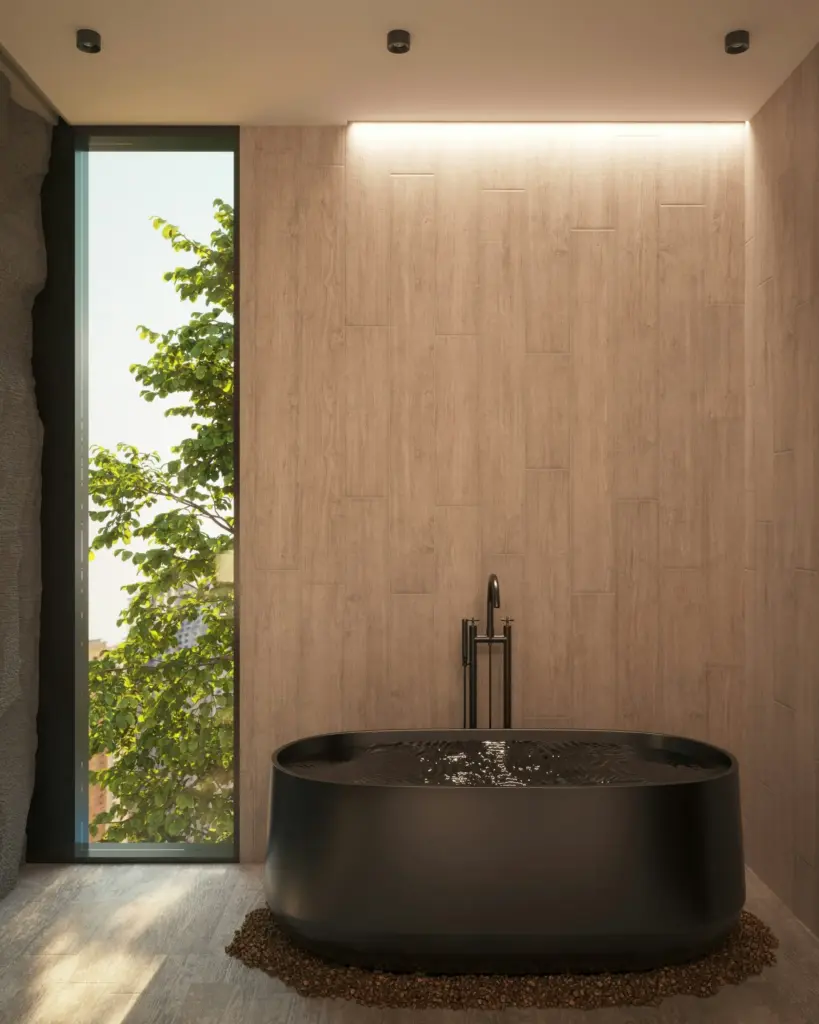
Adopting these green technologies has other benefits. It can enhance a company’s image and attract eco-conscious clients. As these imperatives grow more vital, businesses that embrace them gain a competitive edge.
Leveraging sustainability and wellness can lead to significant advantages. These range from cost savings to improved tenant satisfaction. These imperatives are shaping the future of smart bathroom innovations.
Challenges Facing the Smart Bathroom Market
Despite its promising prospects, the smart bathroom market faces several challenges. High initial costs often deter potential customers. Smart technologies can be pricey, especially for large commercial ventures.
Installation and maintenance require specialized skills. Finding skilled professionals can pose difficulties. This need can increase long-term costs for businesses.
Market adoption is not uniform across regions. Some areas lack infrastructure to support advanced bathroom systems. This disparity can limit market growth and expansion opportunities.
There are additional hurdles:
- Rapid technological advancements leading to obsolescence.
- Security concerns regarding data privacy in connected devices.
- Resistance to change from conventional bathroom setups.
- Budget constraints in smaller commercial projects.
- Technical integration with existing building systems.
Additionally, there are concerns regarding data privacy. IoT-enabled devices collect vast amounts of user data, raising security issues. Ensuring data protection is crucial for consumer trust.
Overcoming these challenges requires strategic planning. Companies need innovative solutions to address cost, skilled labor, and privacy concerns. Only by addressing these barriers can the smart bathroom market reach its full potential.
The Role of Data, AI, and IoT in Commercial Bathroom Solutions
Data, AI, and IoT are revolutionizing bathroom solutions. They play key roles in enhancing user experience and operational efficiency. The integration of these technologies leads to smarter, more responsive systems.
AI provides personalization in bathroom settings. Intelligent mirrors adjust lighting based on user preferences. Smart toilets can analyze usage patterns to optimize water use. Over time, these technologies learn and adapt to user behaviors.
IoT devices monitor usage and health metrics. Smart sensors detect leaks or maintenance issues, reducing downtime. IoT also aids in energy management by adjusting energy consumption based on usage patterns.
Data analytics contributes immensely to bathroom innovation. Gathering and analyzing data provides insights for optimizing bathroom functionalities. Commercial facilities benefit by improving maintenance schedules and reducing costs. Businesses leverage this data to enhance user satisfaction.
Key benefits of integrating data, AI, and IoT include:
- Enhanced predictive maintenance reducing downtime.
- Energy-efficient operations lowering utility bills.
- Improved customer experiences through customization.
- Proactive alerts for repairs and replacements.
- Efficiency in resource management and conservation.
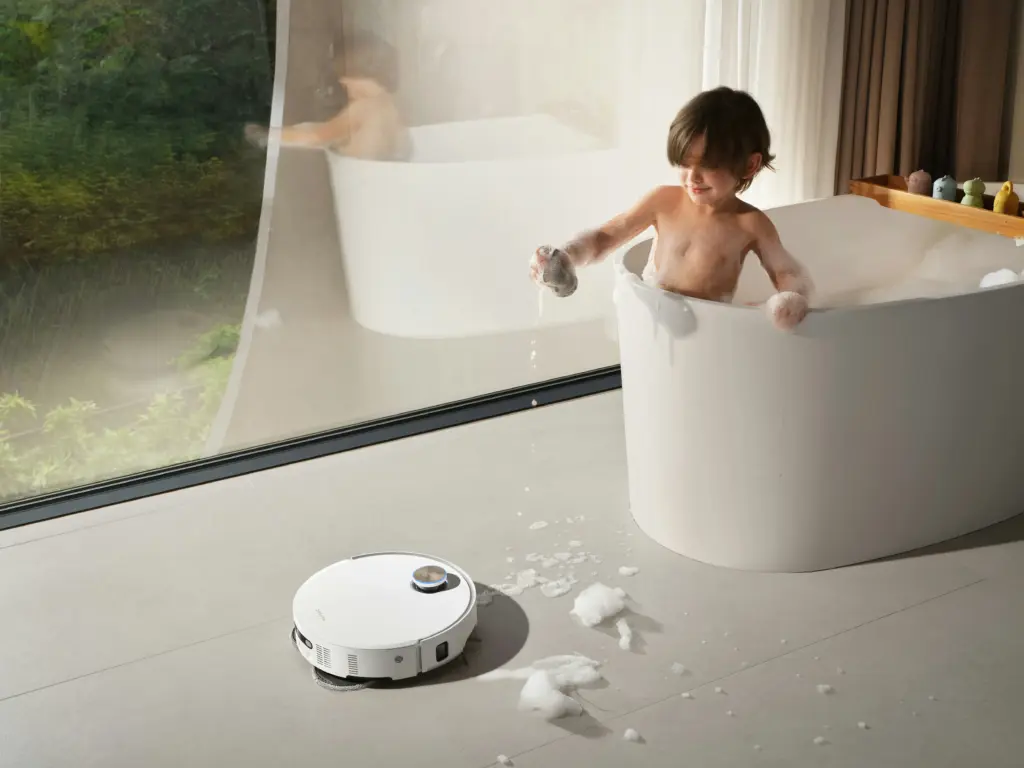
The synergy of these technologies drives the market forward. As they evolve, their applications will broaden. Businesses seeking advanced solutions find value in their implementation. This technology trifecta is integral to the future of smart bathroom solutions.
Future Outlook: Innovations and Market Projections for 2026
The smart bathroom market is poised for significant advancements by 2026. Innovation will focus on user-centric designs and enhanced functionalities. Consumers and commercial developers alike seek solutions that merge efficiency with luxury.
Technological improvements are on the horizon, promising smarter and more integrated systems. Expect AI and IoT to enable even more seamless interactions. The ability to adapt dynamically to user behaviors will become a norm.
Predicted market expansion is also backed by sustainability trends. More projects will prioritize eco-friendly materials and energy conservation. Projections indicate an increasing number of commercial spaces adopting water-saving technologies.
Key future trends and projections include:
- Growth in the integration of AI and machine learning.
- Rise in customizable and modular bathroom solutions.
- Wider adoption of greywater systems and water recycling.
- Continued emphasis on energy-efficient innovations.
- Development of wellness features like aromatherapy systems.
By 2026, the market will likely reflect a blend of technological sophistication and sustainable practices. Innovation will drive the market toward creating smarter, healthier spaces. Commercial developers are expected to embrace these trends to remain competitive. As technology continues to evolve, so will the opportunities within the smart bathroom sector.
Conclusion: Preparing for the Next Wave of Bathroom Technology
As we inch toward 2026, the smart bathroom market promises transformative changes. Commercial projects must align with these advances to meet user expectations. Embracing technology and sustainability will be key.
Staying informed about evolving trends and consumer demands is crucial. Projects that leverage IoT, AI, and eco-friendly materials will likely dominate. These elements will set the standard for future bathroom technologies.
To remain competitive, industry players should focus on continuous innovation. Investing in new technologies and skilled labor will be essential. The goal is to create more intelligent and sustainable spaces for all commercial users. Adapting to these shifts early will ensure success in a rapidly growing market.